Publications
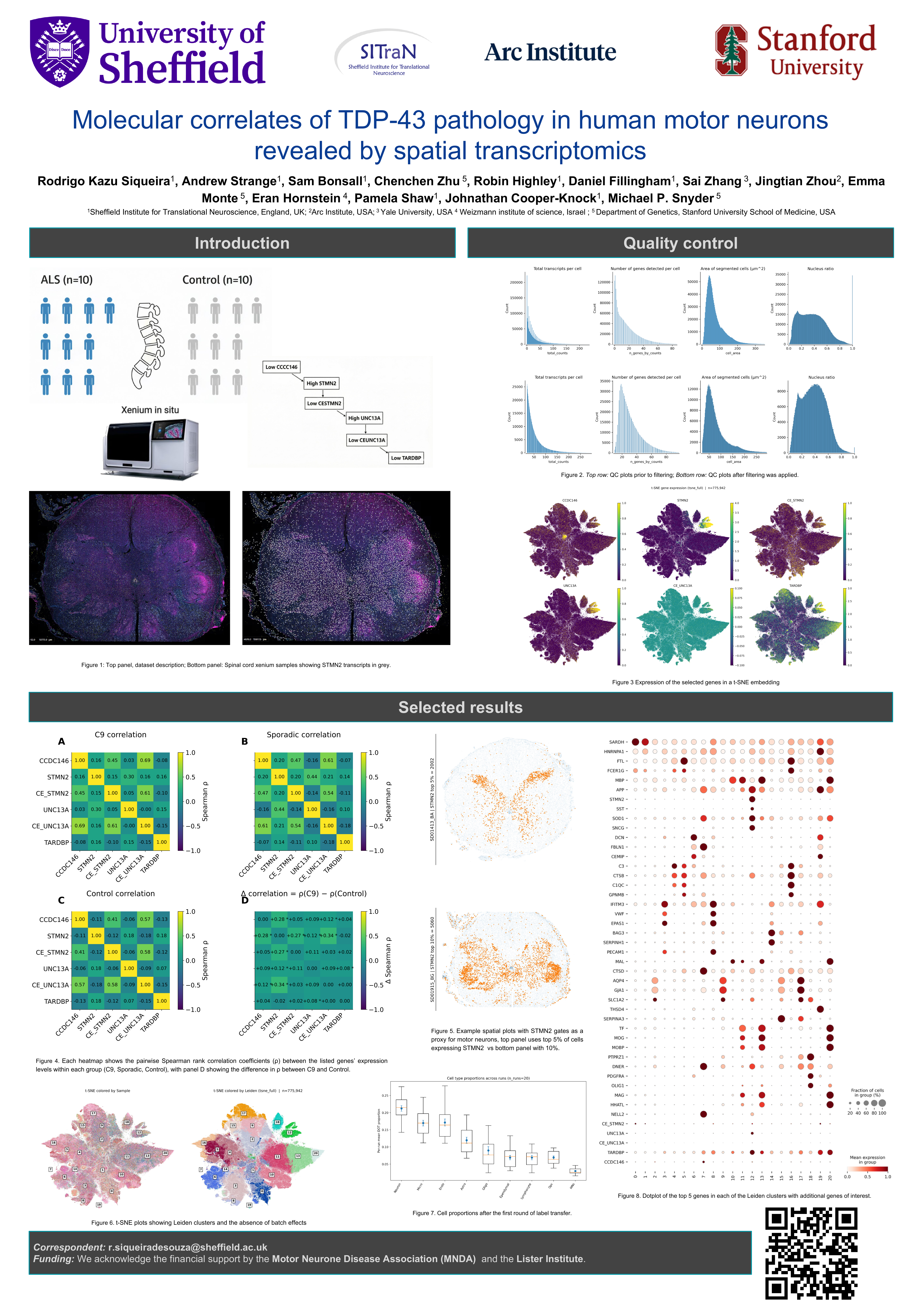
Comprehensive spatial transcriptomic analysis of 1.2M Xenium-profiled cervical spinal cord cells from ALS and control cases, defining motor neuron pathology-enriched populations and revealing TDP-43-associated cryptic exon signatures (STMN2, UNC13A) and CCDC146 correlations within spatially resolved disease niches.
Rodrigo Kazu Siqueira, Andrew Strange, Sam Bonsall, Chenchen Zhu, Robin Highley, Daniel Fillingham, Sai Zhang, Jingtian Zhou, Emma Monte, Eran Hornstein, Pamela Shaw, Johnathan Cooper-Knock, Michael P. Snyder
In preparation — Nature Genetics
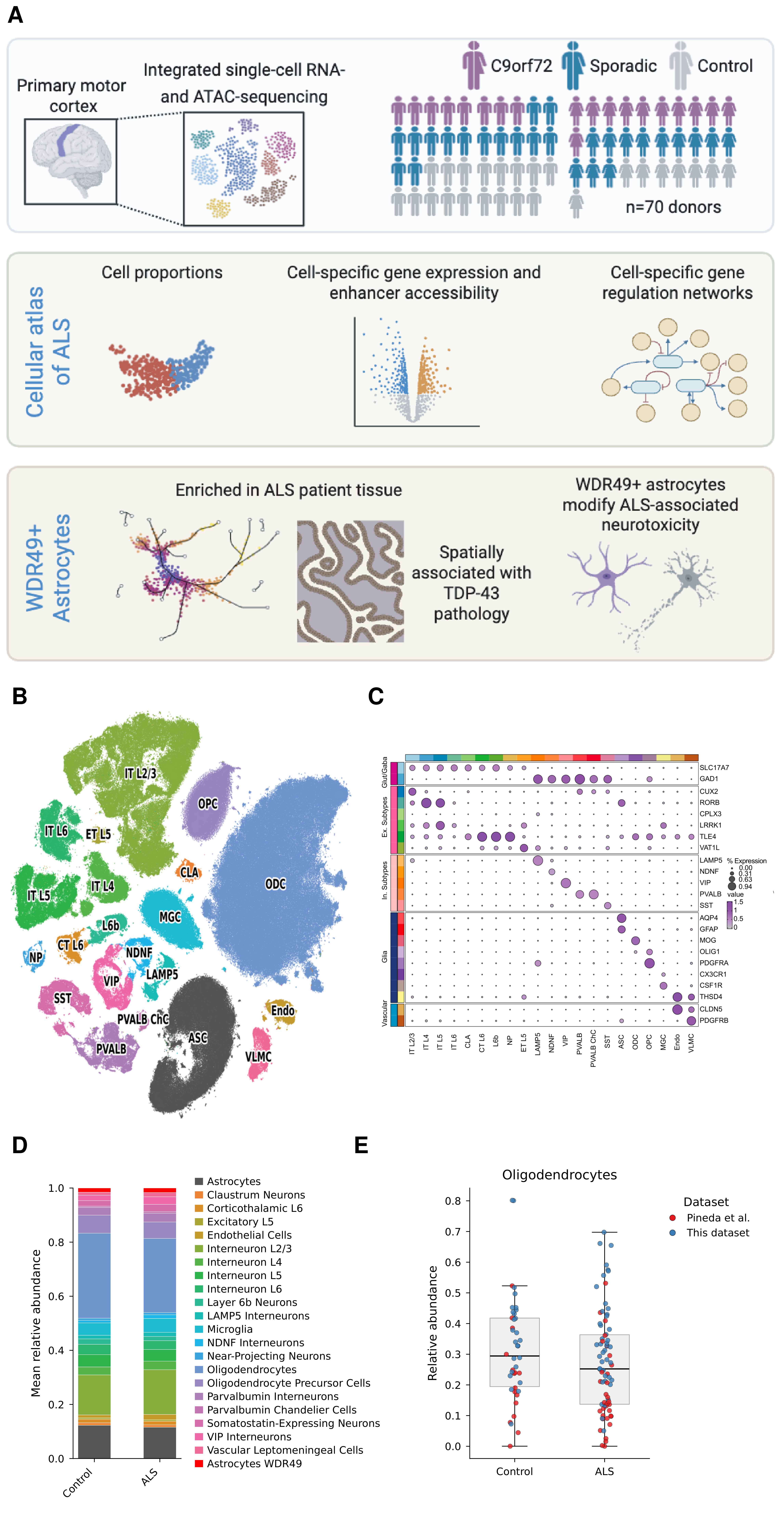
High-quality 10x multiome single-cell profiling of 357,862 cells from 70 volunteers (25 non-neurological controls, 26 sporadic ALS, 19 C9orf72-associated ALS donors) — to our knowledge the largest ALS multiome sequencing dataset to date. Cell-type-specific eGRNs inferred with scDORI; differential gene expression with PyDESeq2; chromatin accessibility with SnapATAC2; compositional changes with scCODA and Milo.
Rodrigo Kazu Siqueira, Sam Bonsall, Marianne King, Andrew Strange, Sai Zhang, Jingtian Zhou, Charlotte van Dijk, Emma Monte, Tatyana Shelkovnikova, Kevin Kenna, Pamela Shaw, Johnathan Cooper-Knock, Michael P. Snyder
In preparation — Nature Neuroscience
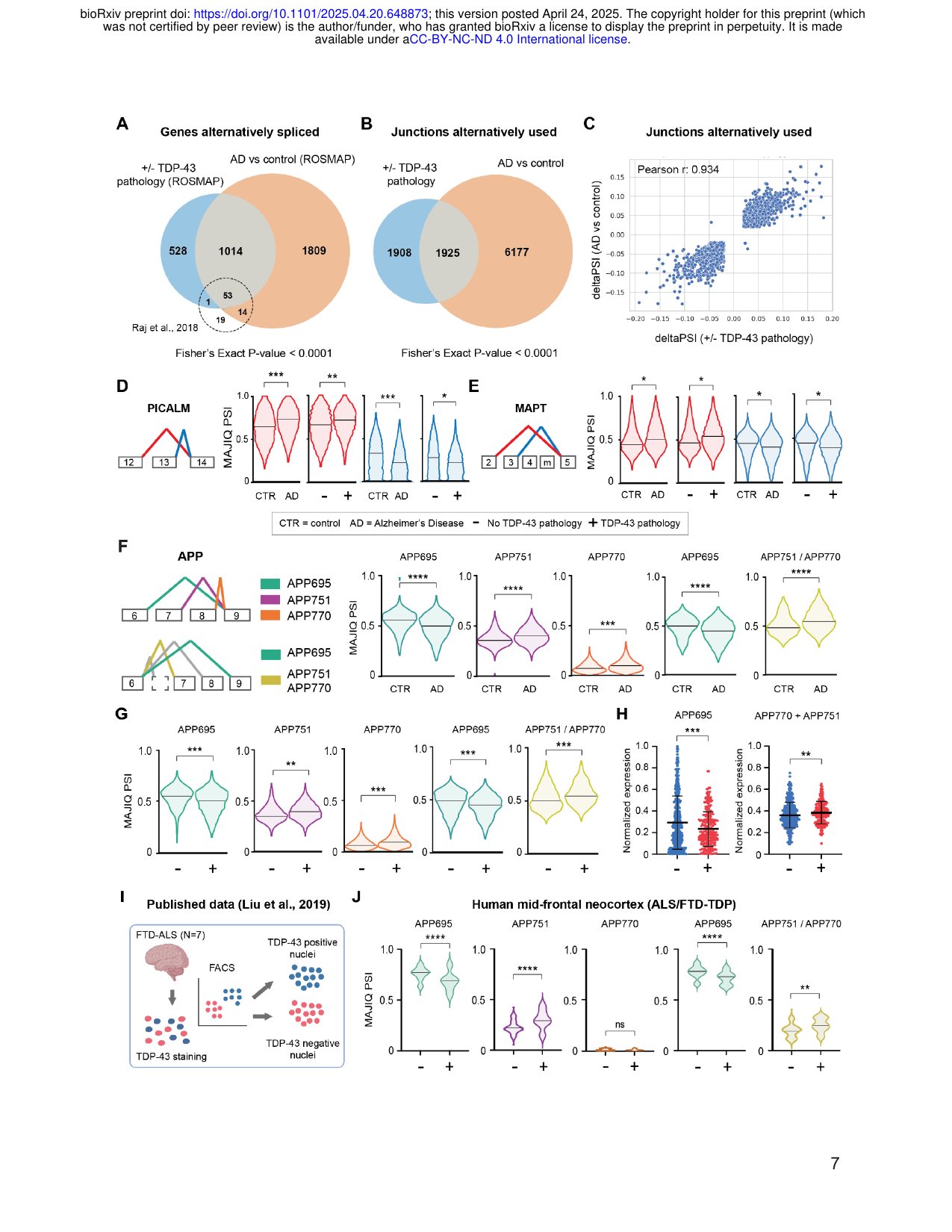
A multi-cohort study showing that TDP-43 pathology broadly drives splicing dysregulation in Alzheimer’s disease, including aberrant APP isoform production (APP751/APP770). TDP-43 toxic gain of cytoplasmic function co-sequesters splicing regulators SCAF11, SRSF5, and TIAL1, mechanistically linking ALS/FTLD-TDP and AD through shared splicing dysfunction.
Welmoed van Zuiden, Thea Meimoun, Chen Bar, Aviad Siany, Lihi Moshe, Nancy Yacovzada, Eviatar Weizman, Manuela Neumann, Aron S Buchman, Yanling Wang, Kazu R.S., Andrew Strange, David A Bennett, Jonathan D Glass, Adam N Trautwig, Nicholas T Seyfried, Johnathan Cooper-Knock, Eran Hornstein
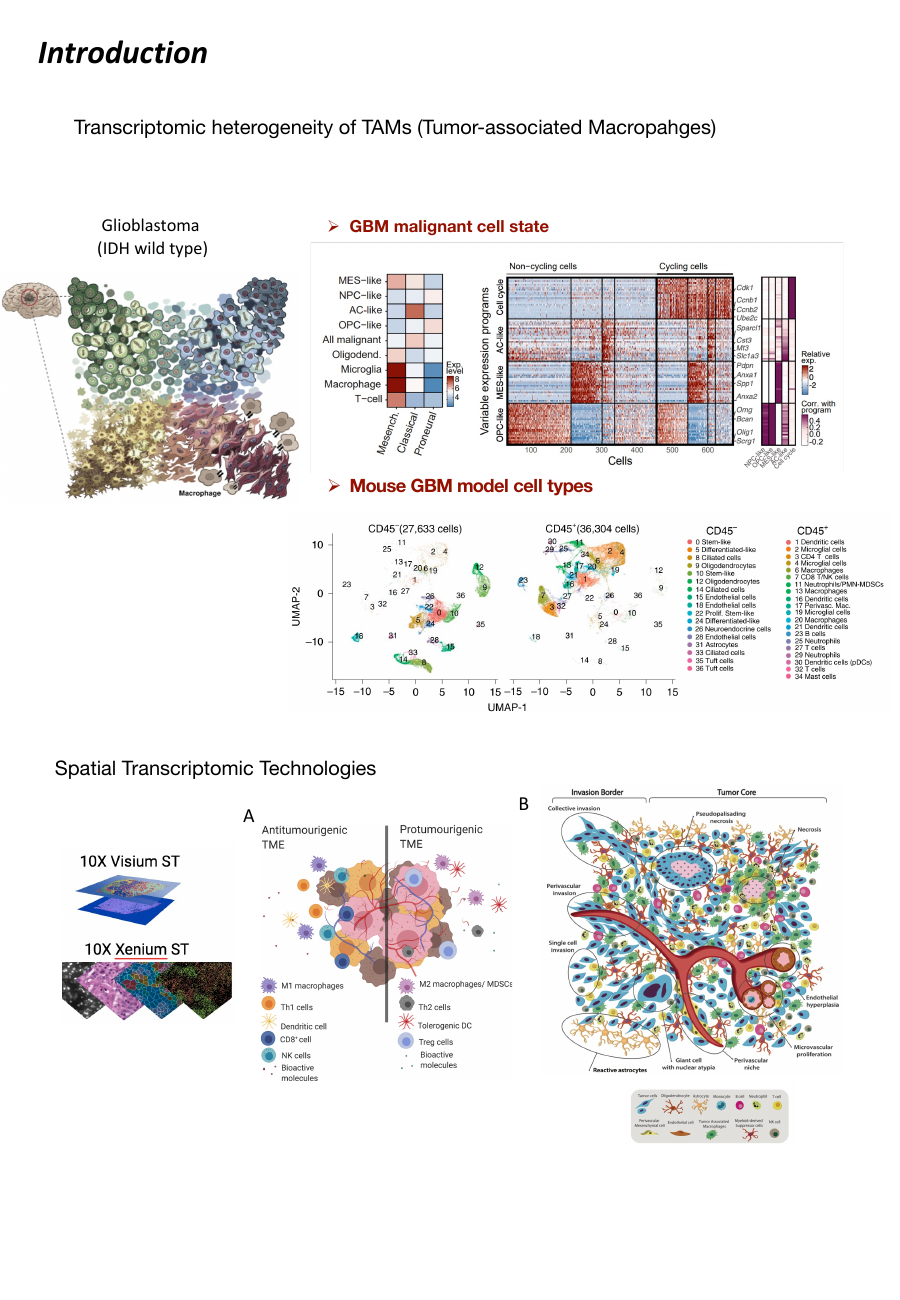
Machine learning models including clustering and zero-shot approaches (Novae) applied to Xenium spatial transcriptomics and multiome data from glioblastoma samples. Identification of distinct tumour-associated macrophage (TAM) subtypes and their spatial localisation within the tumour microenvironment using NicheCompass.
Qianqian Zhang, Grant de Jong, Kazu R.S., David Rowitch, Omer Bayraktar
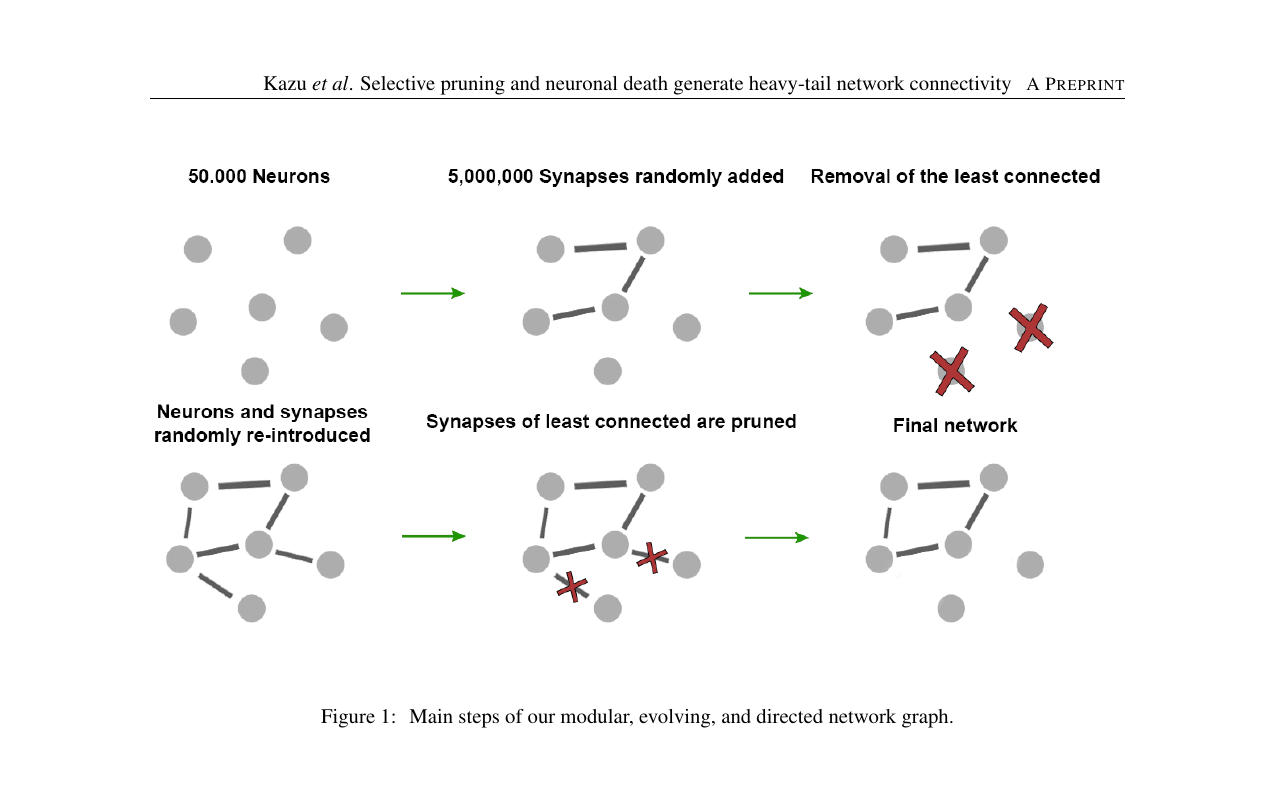
A directed network model in which less-connected nodes and edges are selectively deleted, robustly producing scale-invariant degree distributions without fine-tuning. Results suggest neuronal and synaptic pruning during brain development are selective rather than random, and that preferential detachment is a general mechanism for scale-free network formation alongside preferential attachment.
Kazu RS, Neves K and Mota B
arXiv:2408.02625 [q-bio.NC] (2024)
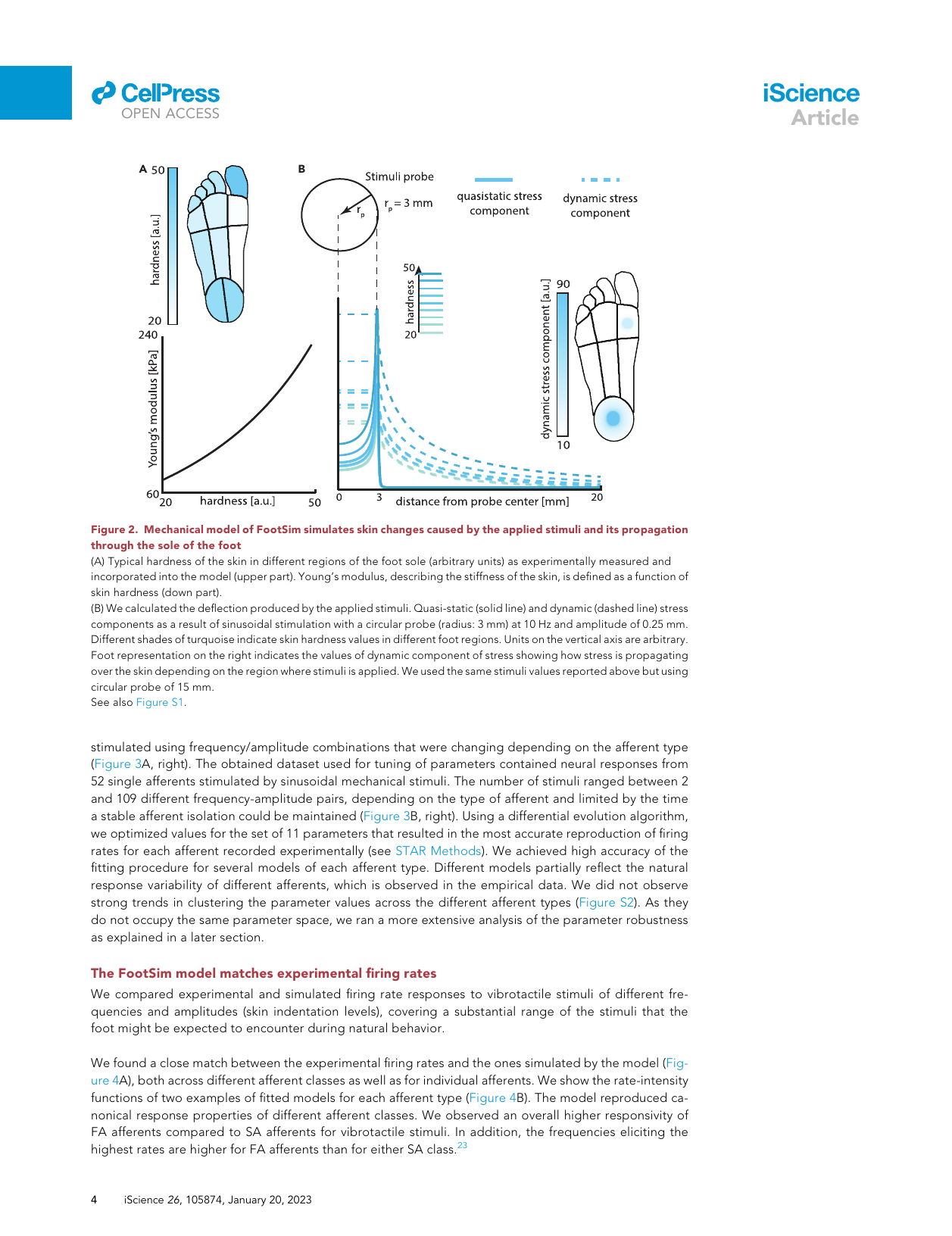
FootSim is a realistic computational model of mechanoreceptor activation in the lower limb. It simulates neural spiking responses to arbitrary mechanical stimuli from all four types of mechanoreceptors innervating the foot sole, fitted to human microneurography recordings. The project won the INSIGNEO prize for best research.
Katic N, Kazu RS, Cleland L, …, Bent L, Raspopovic S and Saal PH
iScience, Vol. 26, Issue 1 (January 2023) — 23 citations
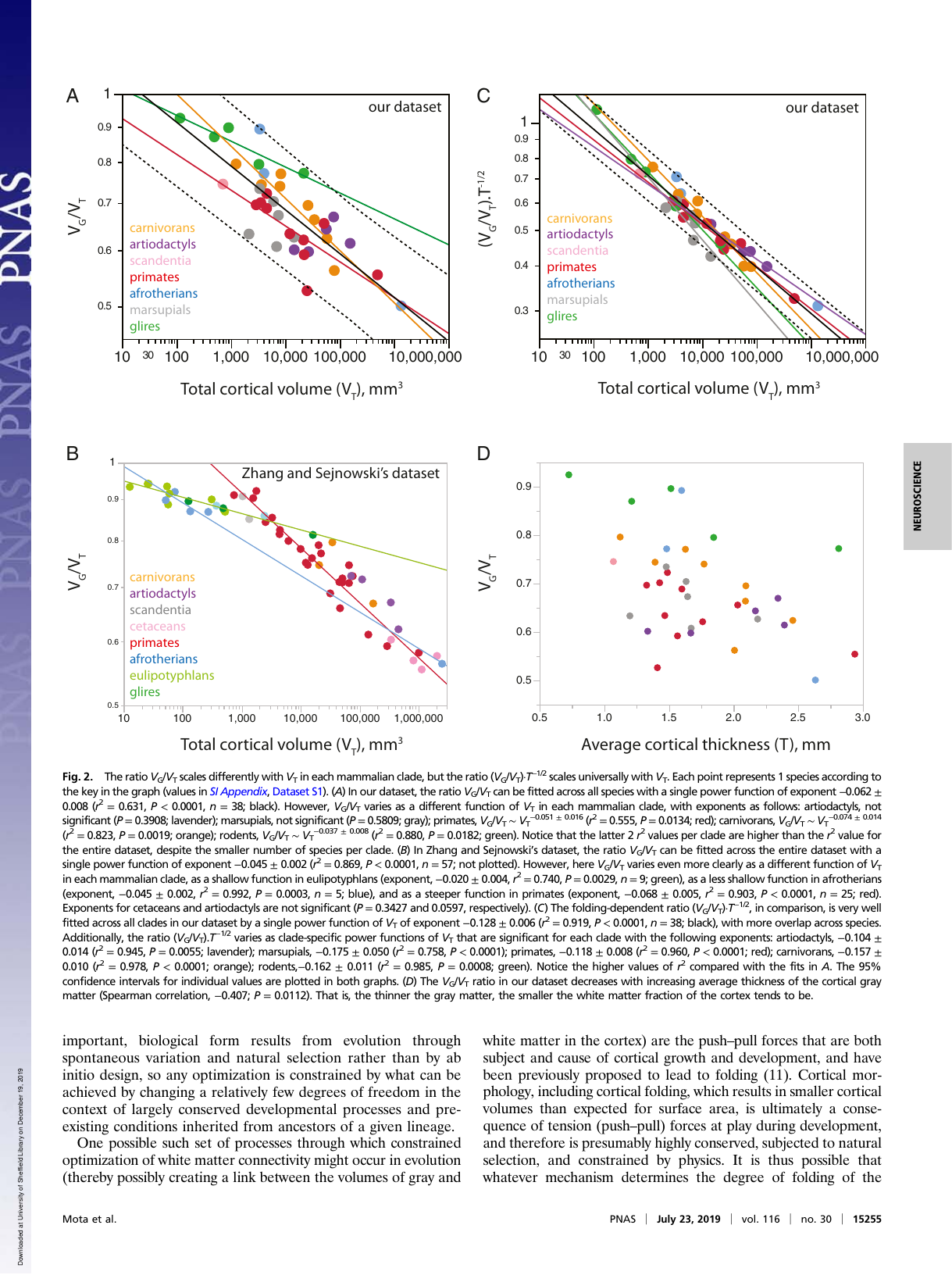
Postulates that relative white matter volume is determined as the developing cortex settles in the most energetically favourable folded conformation, regardless of its number of neurons.
Mota B, Dos Santos SE, Ventura-Antunes L, Neves K, Kazu RS, Herculano-Houzel S.
PNAS, Vol. 116, No. 30 (2019) — 68 citations
Full List of publications
Molecular correlates of TDP-43 pathology in human motor neurons revealed by spatial transcriptomics
Rodrigo Kazu Siqueira, Andrew Strange, Sam Bonsall, Chenchen Zhu, Robin Highley, Daniel Fillingham, Sai Zhang, Jingtian Zhou, Emma Monte, Eran Hornstein, Pamela Shaw, Johnathan Cooper-Knock, Michael P. Snyder
In preparation — Nature Genetics
Astrocyte WDR49 function prevents amyotrophic lateral sclerosis
Rodrigo Kazu Siqueira, Sam Bonsall, Marianne King, Andrew Strange, Sai Zhang, Jingtian Zhou, Charlotte van Dijk, Emma Monte, Tatyana Shelkovnikova, Kevin Kenna, Pamela Shaw, Johnathan Cooper-Knock, Michael P. Snyder
In preparation — Nature Neuroscience
TDP-43 toxic gain of function links ALS/FTLD-TDP and Alzheimer’s disease through splicing dysregulation
Welmoed van Zuiden, Thea Meimoun, Chen Bar, Aviad Siany, Lihi Moshe, Nancy Yacovzada, Eviatar Weizman, Manuela Neumann, Aron S Buchman, Yanling Wang, Kazu R.S., Andrew Strange, David A Bennett, Jonathan D Glass, Adam N Trautwig, Nicholas T Seyfried, Johnathan Cooper-Knock, Eran Hornstein
bioRxiv 2025.04.20.648873
Transcriptional profiling identifies functional niche-specific TAM subtypes supporting Glioblastoma
Qianqian Zhang, Grant de Jong, Kazu R.S., David Rowitch, Omer Bayraktar
In preparation — Nature
Spatiotemporally resolved molecular and cellular architecture of spinal cord injury
Emily R. Burnside, Yeliz Demirci, Jovan Tanevski, Chang Lu, Zoi Katsirea, Kenny Roberts, Guillaume P. Heger, Jimmy Lee, Kazu R.S., Elizabeth Tuck, Julio Saez-Rodriguez, Frank Bradke
In preparation — Cell
Selective pruning and neuronal death generate heavy-tail network connectivity
Kazu RS, Neves K and Mota B
arXiv:2408.02625 [q-bio.NC] (2024)
Modeling foot sole cutaneous afferents: FootSim
Katic N, Kazu RS, Cleland L, …, Bent L, Raspopovic S and Saal PH
iScience, Vol. 26, Issue 1 (January 2023) — 23 citations
White matter volume and white/gray matter ratio in mammalian species as a consequence of the universal scaling of cortical folding
Mota B, Dos Santos SE, Ventura-Antunes L, Neves K, Kazu RS, Herculano-Houzel S.
PNAS, Vol. 116, No. 30 (2019) — 68 citations
Cellular scaling rules for the brain of Artiodactyla include a highly folded cortex with few neurons
Kazu RS, Maldonado J, Mota B, Menger PR, Herculano-Houzel S.
Frontiers in Neuroanatomy, Vol. 8 (2014) — 56 citations